
-39f4deaa-3fc1-4938-88cb-fa2440af338a.png)





The online language learning market is fiercely competitive, expected to reach $44.9 billion by 2031. Duolingo and Babbel are the two most prominent apps in this space: Duolingo has attracted over 500 million users with its gamified approach, while Babbel has secured 25 million paid subscribers through structured courses.
Both apps promise to help users reach B1 level on the European language standard, but market reviews alone can't tell you which one truly fits your needs.
That's why I spent several months learning Spanish with both apps, then tested what I'd learned during a trip to Barcelona—chatting with locals, ordering at restaurants, asking for directions, and more.
This comparison is based on real hands-on experience, covering everything from teaching methods and course content to pricing and actual results, helping you find the language learning tool that's right for you.
Duolingo vs Babbel at a Glance
Before diving into details, here's the core difference: Duolingo feels like a carefully designed game that makes you want to open it every day. Babbel is more like a serious but patient teacher who wants you to truly understand each concept.
The specific differences break down like this:
| Comparison | Duolingo | Babbel |
| Core Philosophy | Gamified learning | Structured instruction |
| Pricing | Free (with ads) / Super Duolingo$12.99/month | $95.88/year (single language) |
| Number of Languages | 42 languages | 14 major languages |
| Learning Approach | Bite-sized practice, fun-focused | Thematic modules, practicality-focused |
| Lesson Duration | 5-10 minutes/lesson | 10-15 minutes/lesson |
| Grammar Instruction | Implicit learning, minimal explanations | Detailed explanations |
| Conversational Skills | Vocabulary-focused, weaker on conversation | More practical dialogue scenarios |
Bottom line: If you want to learn during commute time, waiting in lines, or other spare moments, and don't mind gradually building vocabulary, Duolingo's free version works great.
But if you have specific use cases (like travel or work) and need to quickly master practical conversation and grammar logic, Babbel's structured courses are more efficient.
The annual prices are comparable. What matters is your learning goals and schedule.
Duolingo vs Babbel: What Languages Can You Learn?
When choosing a language learning app, the first question to consider is: does it support the language I want to learn?
Duolingo completely crushes the competition in language variety, offering 42 languages. From mainstream options like Spanish, French, German, and Italian, to niche ones like Irish and Welsh, and even Klingon from Star Trek and High Valyrian from Game of Thrones, this coverage is market-leading.
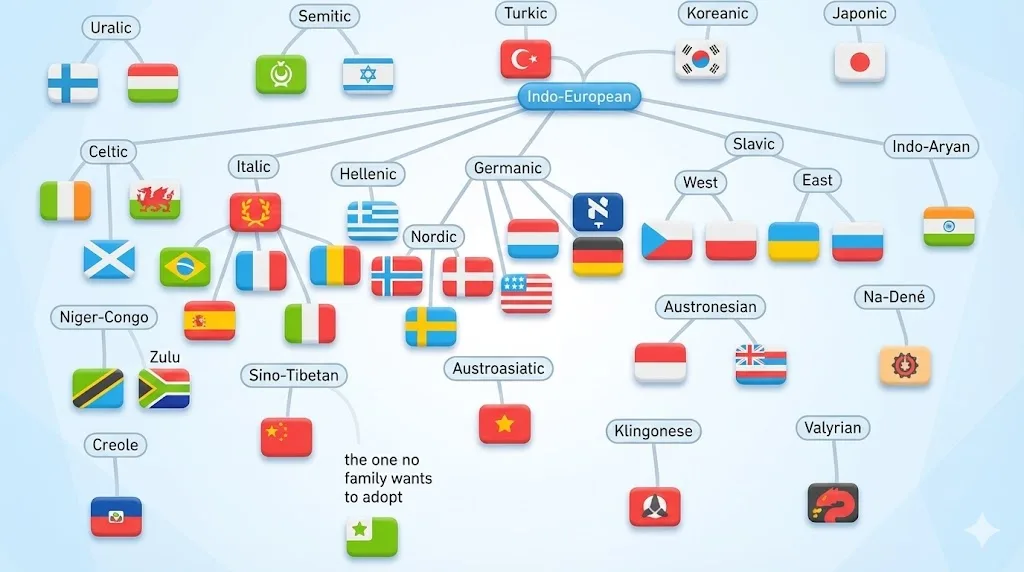
Worth noting: Duolingo invests heavily in popular languages. The Spanish and French courses feature thousands of exercises, interactive stories, grammar tips, and podcast content. The quality matches any paid app.
However, newly added niche languages are a different story. Courses like Finnish and Zulu are relatively thin with limited depth. If you're learning a mainstream language, Duolingo works great, but for niche languages, set your expectations accordingly.
Babbel takes the completely opposite approach, focusing on just 14 mainstream languages: Spanish, French, German, Italian, and so on.
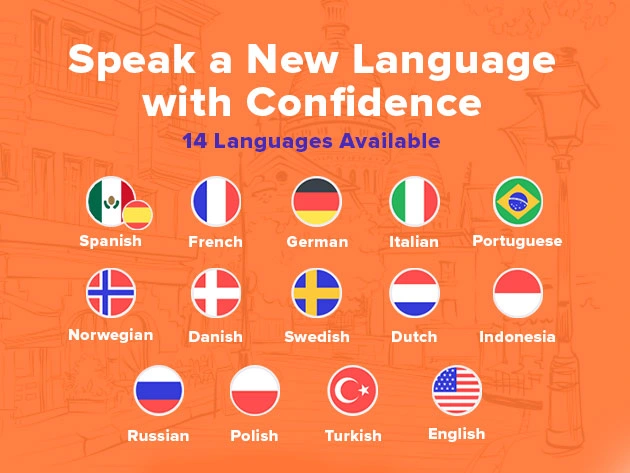
The advantage of this focus is consistency. Every language is designed by professional teachers with uniformly high course quality. You won't get the "some languages are great, others terrible" situation. The downside? Narrow language coverage, with no Asian languages whatsoever.
If you're learning the most popular languages like Spanish or Italian, the content quality gap between Duolingo and Babbel isn't huge, with Duolingo having the free advantage.
But if you want to learn Japanese, Korean, or Arabic, Duolingo is your only option. For relatively niche European languages that Babbel supports, like Russian, Polish, or Turkish, Babbel's systematic approach is better.
Duolingo vs Babbel: Pricing Comparison
Price is often a major consideration when choosing a language learning app. Let's compare the 2026 pricing for both platforms:
| Feature | Duolingo | Babbel |
| Core Approach | Game-based learning | Structured curriculum |
| Cost | Free (ad-supported) / Super Duolingo $12.99/month | $95.88/year (per language) |
| Language Options | 42 languages | 14 mainstream languages |
| Teaching Method | Short exercises, entertainment-driven | Topic-based lessons, utility-driven |
| Session Length | 5-10 minutes per lesson | 10-15 minutes per lesson |
| Grammar Teaching | Intuitive learning, light on explanations | Comprehensive explanations |
| Speaking Practice | Vocabulary-heavy, limited conversation | Real-world conversation focus |
Duolingo: Free but Limited
Duolingo's core courses are completely free, which is its biggest advantage. You can learn all language content, join leagues, check stats, all without paying.
But the free version has obvious limitations: ads pop up every few questions (15-30 seconds each), and when you run out of "hearts" (5 mistakes per day), you have to wait for them to refill or watch ads to continue, which disrupts your learning flow.
This is the brilliance of Duolingo's pricing strategy—the free tier is good enough to keep you engaged, but the premium tier eliminates every frustration. Super Duolingo removes ads, grants unlimited hearts, enables offline learning, and offers custom practice. For regular learners, the upgrade makes a substantial difference.
Babbel: Paid and Single-Language Only
Babbel has no free version, only 1-3 trial lessons. The monthly fee is $15.99, or you can pay $599 once for lifetime access to all 14 languages. Here's what you need to know: Babbel's subscription model is single-language.
If you want to learn both Spanish and French, you need to buy two separate subscriptions, which isn't ideal for users with multi-language learning needs.
From a pricing perspective, Duolingo clearly offers better value. The free version already meets most basic learning needs, and if you want a better experience, platforms like GamsGo can help you get full features at an affordable price.
Unless you're focused on just one Babbel-supported language and have the budget, Duolingo has an overwhelming price advantage.
Duolingo vs Babbel: Discount Subscriptions Available
Beyond official pricing, both apps have some more affordable subscription options worth noting.
For Super Duolingo subscription, purchasing through GamsGo offers significant discounts. For annual plans, GamsGo prices at around $45 (or $3.99/month), saving over 40% compared to the official fee. Functionality is identical to official subscriptions, including ad-free experience, unlimited hearts, offline learning, and other core features.
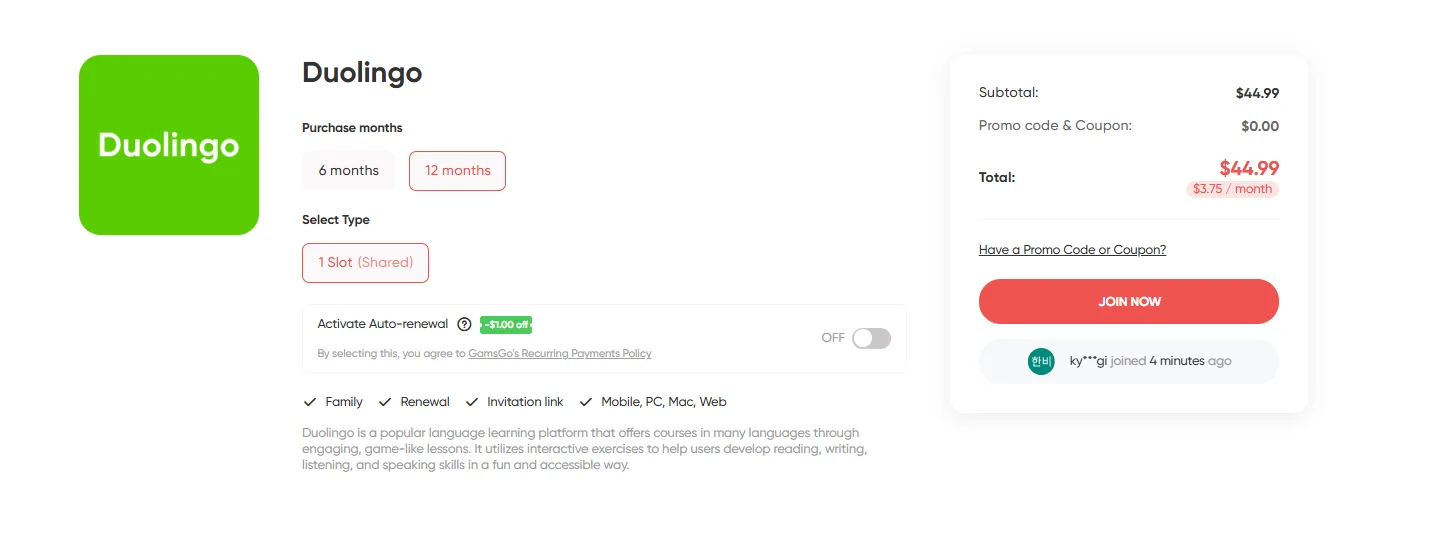
From my personal experience over six months, service stability has been solid, making it a good choice for users with long-term learning needs.
Babbel's discount strategy mainly focuses on official channels. Students can get a 65% subscription discount through student verification, which is a substantial savings for student users.
Additionally, Babbel runs its biggest promotional campaign of the year during Black Friday, with significant price cuts on all plans including lifetime subscriptions. If your purchase timing is flexible, I'd recommend waiting for these promotional periods.
Save 50% on Super Duolingo at GamsGoSave 50% on Super Duolingo at GamsGo
Duolingo's Gamified Learning vs Babbel's Traditional Courses
Duolingo: Addictive Gamified Learning
Duolingo's core strategy is simple. As founder Luis von Ahn said in his TED talk: "Use the psychological mechanisms of social media and games to make learning as addictive as scrolling TikTok." And it truly delivers on this promise.
The entire learning process is designed as a skill tree path. You must complete current skill nodes to move forward. Each completed exercise earns you experience points, gems, and unlocked achievements.
Then there's Duolingo league competition feature. You're assigned to a league where you compete with users worldwide for experience points. Top performers advance to higher leagues. This design taps into our competitive nature.
Exercise types mainly include picture matching, sentence translation, dictation, speaking practice, and fill-in-the-blanks. Duolingo Stories is a highlight, presenting real conversation scenarios through interactive stories.
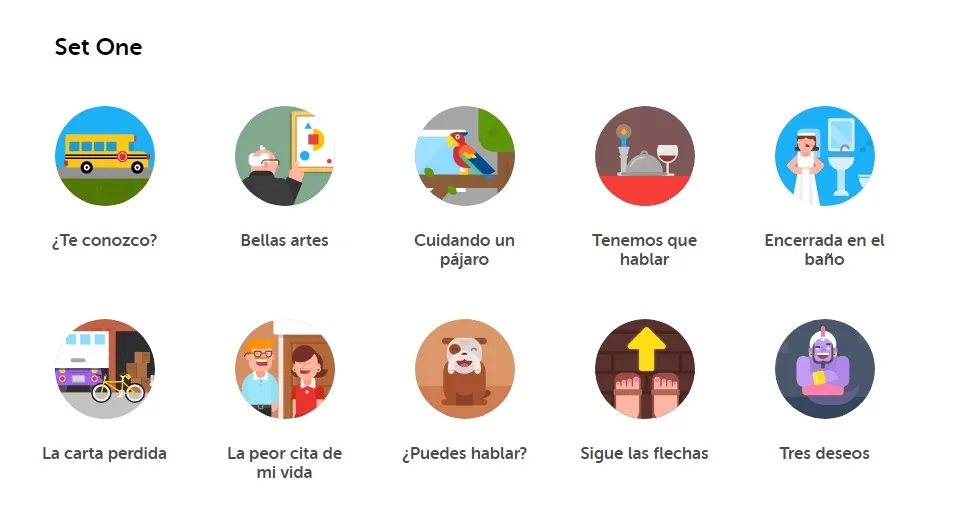
But honestly, Duolingo is quite weak on grammar instruction. Often you're just choosing answers by "feel" without truly understanding why.
For example, when learning Spanish verb conjugations, Duolingo has you repeatedly practice "yo hablo," "tú hablas," "él habla," but rarely explains the conjugation rules for -ar ending verbs clearly.
You might get the questions right, but when you encounter a new verb, you still don't know how to conjugate it.
Babbel: Traditional but Efficient Structured Teaching
Babbel uses a more traditional teaching method, but makes it more efficient through digital tools.
A typical Babbel lesson flows like this: first, new vocabulary is introduced through pictures, audio, and example sentences. Then grammar rules are explained with brief text or animated videos.
Next, interactive exercises reinforce the material. Then you learn practical expressions through dialogue scenarios. Finally, review quizzes check your understanding.
What I appreciate most about Babbel is its step-by-step approach to grammar. It doesn't just throw boring tables at you from the start. Instead, it breaks down rules within specific contexts.
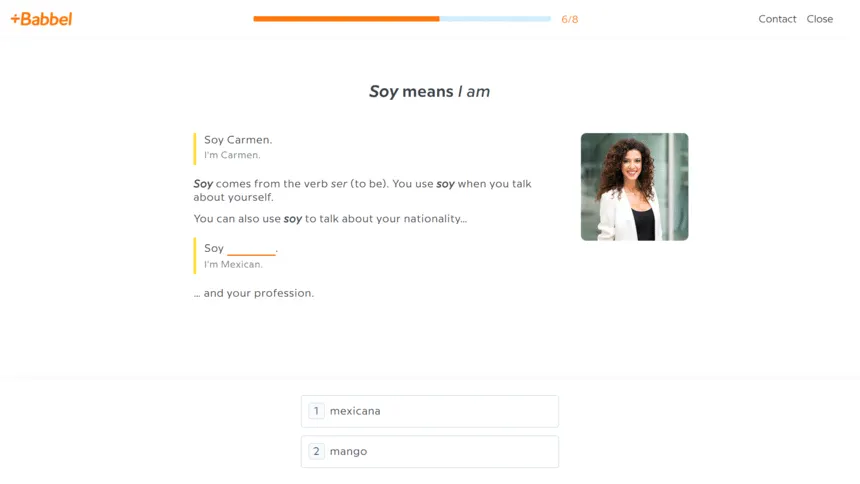
For example, when learning to express "I am," Babbel first presents the core word "Soy" (I am) and explains it comes from the verb "ser" (to be). Then it not only tells you this word is used for self-introduction (like "Soy Carmen"), but immediately expands to nationality (like "Soy mexicana") and occupation scenarios.
This "explanation + multiple scenario application + fill-in practice" teaching logic helps me truly understand how vocabulary works, rather than just mechanically memorizing.
Beyond regular app courses, Babbel used to offer Babbel Live real-time group classes. I tried a few sessions. Instant pronunciation correction and real human interaction really helped with speaking. This was a major advantage Babbel had over Duolingo.
Unfortunately, Babbel Live was discontinued for individual users in July 2025, which is disappointing for personal learners eager to improve their speaking skills.
The Trade-off
In terms of teaching depth, Babbel clearly wins. But for engagement and ease of sticking with it, Duolingo has the advantage.
If your goal is "learn a little each day and build up gradually," Duolingo's gamified design makes it easier to stay consistent. If your goal is "reach conversational level for travel or work within 3-6 months," Babbel's structured teaching is more efficient.
Learning Outcomes: What Level Can You Actually Reach?
This is the crucial question: what level can you actually achieve with these two apps? Based on my real testing experience: both can get you to basic conversational level, but you'll struggle with accents and non-standard dialogue.
I completed most of Duolingo's Spanish course and accumulated about 3,000 vocabulary words. When traveling in Mexico, I could read menus, signs, and simple instructions. I could handle hotel check-ins and grocery shopping. Duolingo definitely taught me plenty of practical vocabulary and basic sentence patterns.
But deeper conversations with locals hit a wall. They spoke with accents, talked fast, and used slang. I could only catch the gist, struggling with details and complex expressions. When I wanted to express complex ideas myself, I had to pause and organize my thoughts, unable to respond fluently. Duolingo can get you "able to speak," but not "speaking fluently."
After switching to Babbel, things improved. Its dialogue scenarios were closer to reality. Ordering at restaurants, booking hotels, asking for directions, handling emergencies—Babbel had dedicated training for all of these. In Barcelona, I found myself much more confident in these specific scenarios, able to communicate very smoothly. Babbel's practical conversation training really works.
But Babbel has the same limitations. When conversations went beyond the "standard scripts" in the lessons, like a taxi driver chatting about the local football team, or a waiter speaking with a heavy Catalan accent, I'd still get stuck. Babbel teaches "standard dialogue for standard scenarios," but the real world is more complex.
Actual Level Comparison:
According to the Common European Framework of Reference (CEFR), both apps can help you reach A2-B1 level. Specifically:
- Vocabulary: 2,000-3,000 common words (similar for both)
- Reading: Can understand simple articles, menus, signs (both work)
- Listening: Can understand slow, standard speech, but struggle with real accents and fast conversation (both have this issue)
- Speaking: Can handle basic daily conversation, Babbel better for specific scenarios (ordering food, asking directions)
- Grammar: Babbel explains more clearly, Duolingo relies on repetitive practice
My Conclusion: Don't expect to reach native-level fluency using just an app, but they can definitely take you from zero to being able to travel abroad and handle daily communication.
But to truly break through the "can't understand accents, can't speak fluently" barrier, you must combine with real human conversation practice and extensive authentic content input (watching local TV shows, listening to podcasts, language exchange). Apps are the starting point, not the endpoint.
User Experience: Which One is Better to Use?
Duolingo: Easy and Friendly
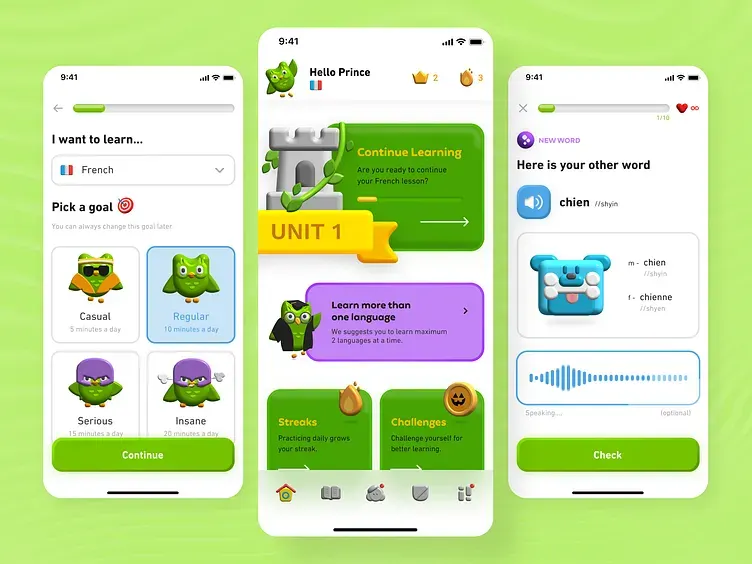
Duolingo's interface is colorful with a cartoon style. That green owl Duo is everywhere.
You can start learning immediately upon opening the app. Each lesson is 5-10 minutes with a real-time progress bar and celebration animations when you finish. This instant feedback gives you a real sense of achievement.
Streak tracking, league rankings, achievement badges—these motivational systems are simple but they work. Multi-platform syncing is seamless too.
Babbel: Professional and Efficient
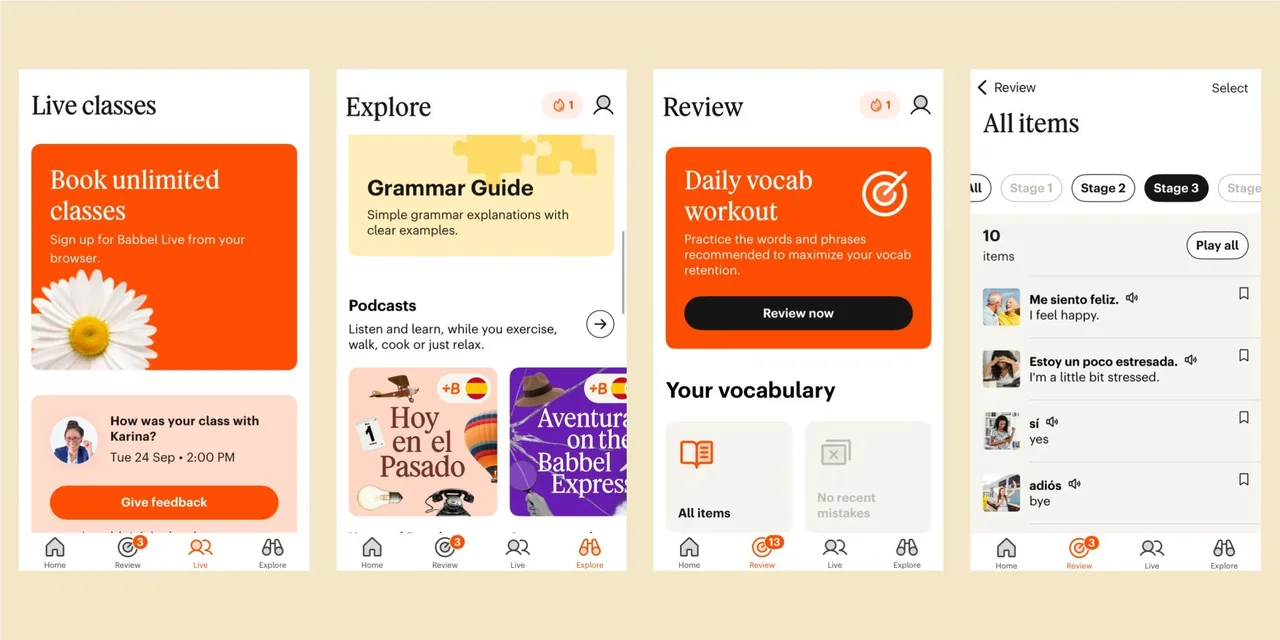
Babbel takes a clean, professional approach with a textbook-like layout. Topic modules are clearly categorized. You can freely choose your learning path. Each lesson is 10-15 minutes. There's a smart review system based on the forgetting curve that reminds you to review at optimal times. Very scientific.
But personally, I find the atmosphere a bit dry. After completing exercises, you just get simple "correct/incorrect" feedback without much else. Using it for extended periods feels like doing homework. For someone like me who needs some fun to stay motivated, Babbel definitely requires stronger self-discipline.
User experience is truly subjective. I like Duolingo's lighthearted fun, but some friends find it too childish and prefer Babbel's professional style. It depends on your personal habits. If you need motivation and instant feedback, choose Duolingo. If you value professionalism and depth, choose Babbel.
Duolingo vs Babbel: Which One Is Right for You?
After all these comparisons, you might still be wondering "which one should I actually choose?" The answer really depends on your learning goals, time, and budget. Based on my own experience and that of friends, here are specific recommendations for different types of learners:
Complete Beginners:
I recommend Duolingo's free version. Zero cost to try it out, gamified design lowers the barrier, gentle learning pace. Start with the free version, complete the first 3-5 units, stick with it for 2-4 weeks. Once you confirm sustained interest, purchase Super Duolingo through GamsGo to enhance your learning experience.
Cramming Before Travel (1-3 months):
I recommend Babbel. Time is tight and you need efficient practical conversation learning. Babbel's scenario design (hotels, restaurants, transportation, shopping) perfectly fits travel needs. Focus on the "Travel" and "Daily Life" modules, 30-60 minutes per day, and you can reach basic conversational level in 3 months.
Long-term Systematic Learners (Aiming for Fluency):
I recommend the Babbel + Duolingo combination. Babbel handles systematic grammar and structure, Duolingo maintains daily exposure and vocabulary building, combined with real human conversation (iTalki, offline classes), reading original books, and watching shows. First 6 months: mainly Babbel (30-45 minutes/day), supplemented with Duolingo (10-15 minutes/day). Goal: reach B2-C1 in 24 months.
Students on a Budget:
I recommend purchasing Super Duolingo through GamsGo. While the free version works, a $4/month investment removes ads and gives unlimited hearts, significantly improving the learning experience. Combined with YouTube channels, free language exchange apps (Tandem, HelloTalk), and community language corners, this offers the best value.
Final Recommendation: Why I Chose Duolingo
After months of in-depth use and comparison, my answer is clear: for most people, Duolingo is the better choice.
Babbel suits highly self-disciplined people with short-term, specific goals who are learning just one language. But for most learners, the biggest challenge is consistency. Duolingo's gamified design, while simple, genuinely motivates daily learning.
Moreover, Duolingo is free and globally accessible, making it far more democratizing than Babbel's paid courses. If you're considering an upgrade, I suggest purchasing Super Duolingo through GamsGo at just $3.99/month for great value and stable experience.
Apps are just support tools. True fluency requires time, persistence, and diverse learning methods. But Duolingo is genuinely a great starting point that makes language learning easier to begin and easier to stick with.
Best of luck on your language learning journey!
We’ve prepared an exclusive promo code for all blog readers:
Enjoy an additional 3% off on your next purchase!
Valid across all categories — streaming accounts, AI tools, game top-ups, software subscriptions, and more.
FAQ
Can you really become fluent with Babbel?
Honestly, no. No app alone can make you fluent—that's just the limitation of app-based learning. Babbel can get you to intermediate level (A2-B1) for daily conversations. But true fluency (B2-C1) requires real classes, conversation practice, and real-world use.
Which is better, Babbel or Duolingo?
There's no absolute answer. For beginners on a budget, Duolingo wins: free, fun, 42 languages, great for building habits. If you're self-disciplined, focused on one European language, and don't mind paying, Babbel's systematic approach is more efficient at $95.88/year.
Is Babbel worth the extra cost over Duolingo?
Depends on your goals. Just trying it out? Duolingo's free version is enough. Want systematic grammar and structured courses? Babbel's $95.88/year delivers more in-depth, targeted training that's worth the investment.
Is Super Duolingo worth subscribing to?
Yes, if you're serious about learning. It removes ads, unlimited hearts, and offline access make learning much smoother. Through GamsGo at $3.99/month (70% off official pricing), it's absolutely worth it.
Can you use Duolingo and Babbel together?
Absolutely! Use Duolingo 15-20 minutes daily for habit-building and vocabulary. Add Babbel 3-4 times weekly for 30-minute sessions focusing on grammar and dialogue. They complement each other perfectly for better results than using either alone.

